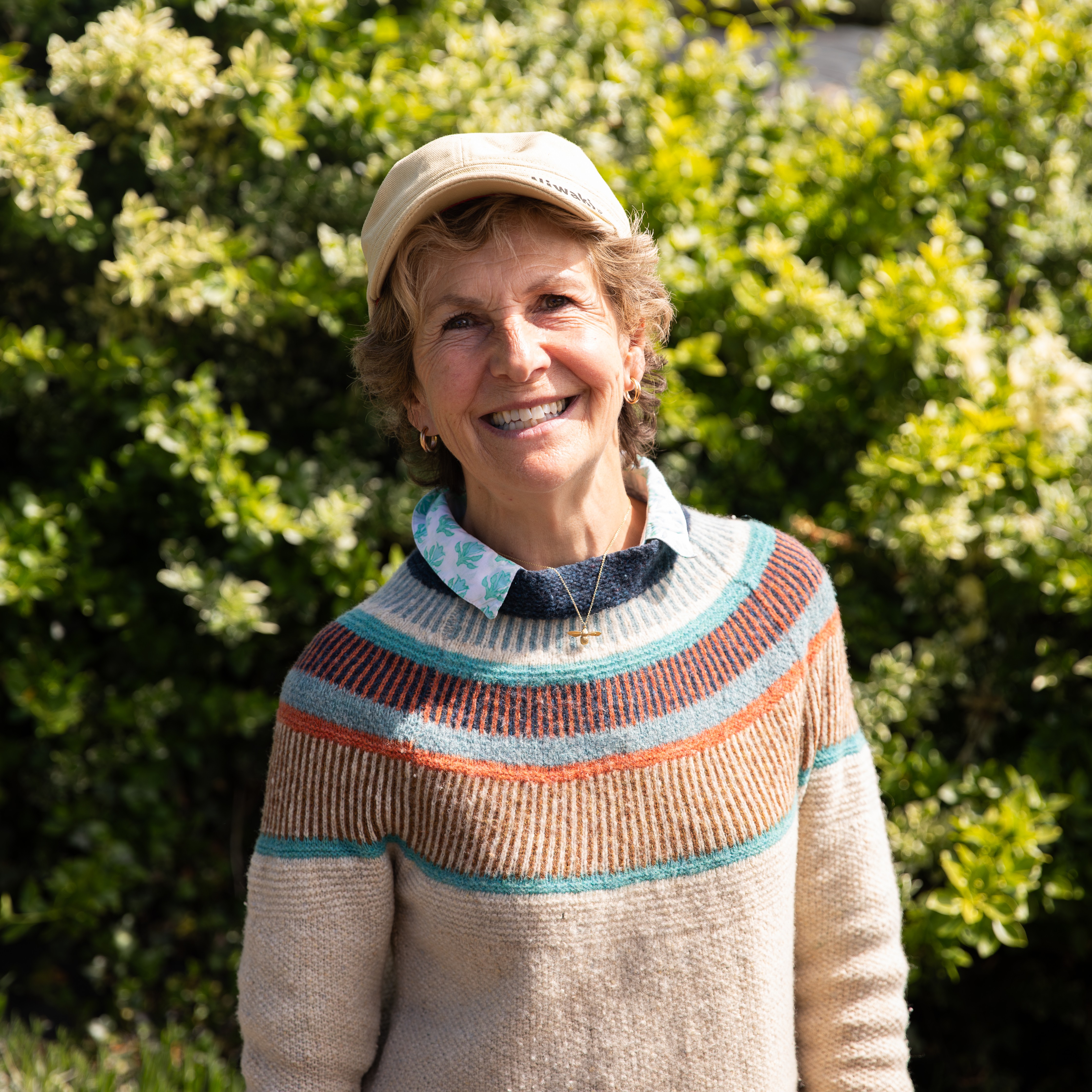
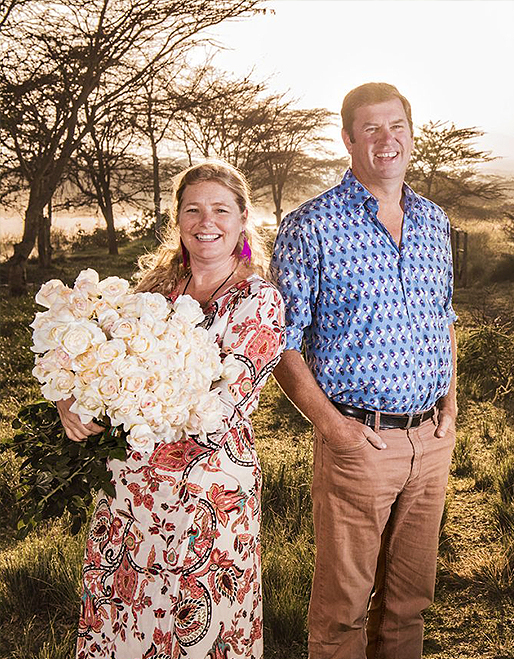
I founded The Real Flower Company in 1995 with a vision to grow and sell beautiful scented flowers, whilst placing provenance, sustainability, and good business ethics into all the company does.
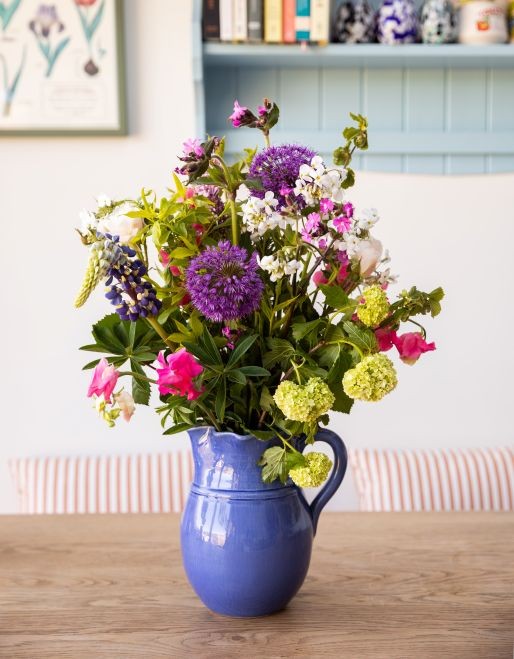
The lamentable lack of scent in most cut flowers inspired me to create The Real Flower Company so that our customers could experience the joy of fragrant English flowers, herbs and foliage.
I’m based at the family farm at Hinton Ampner in the South Downs National Park, visiting the London stores and the Chichester farm regularly. I feel incredibly lucky that my daily commute is a meander through the flower paddock, so each morning I see new colour and growth, and I arrive at my desk feeling uplifted by the beauty of everything we grow.
Rosebie.
Born from a walled garden. Built on the belief that flowers should always smell like flowers.
The Real Flower Company was founded in 1995 by Rosebie Morton, not as a business plan but as a quiet act of rebellion. Frustrated by the scentless, characterless bouquets that filled British florists at the time, she began growing roses in her mother-in-law's walled garden in Hampshire, determined to prove that flowers could be beautiful in the way nature intended: fragrant, individual, and genuinely alive.
From those first Hampshire beds, word travelled. Covent Garden came calling, and the business began to take shape.
Bringing flowers to where people live.
We were among the first florists to sell flowers online, dispatching bouquets across the United Kingdom in our signature green branded boxes, tied with a distinctive olive-green bow. That early commitment to the internet was driven by the same instinct that started the company: more people should have access to flowers worth having.
In 2016, we opened a concession in Selfridges and our first standalone boutique on Chelsea Green, followed by a move to larger premises in Parsons Green in 2019 to accommodate the growing weddings and events business. A second boutique opened in 2022 in Highgate, steps from Hampstead Heath, where the shop feels as much like a garden as a florist.
Rooted in Britain. Growing all year.
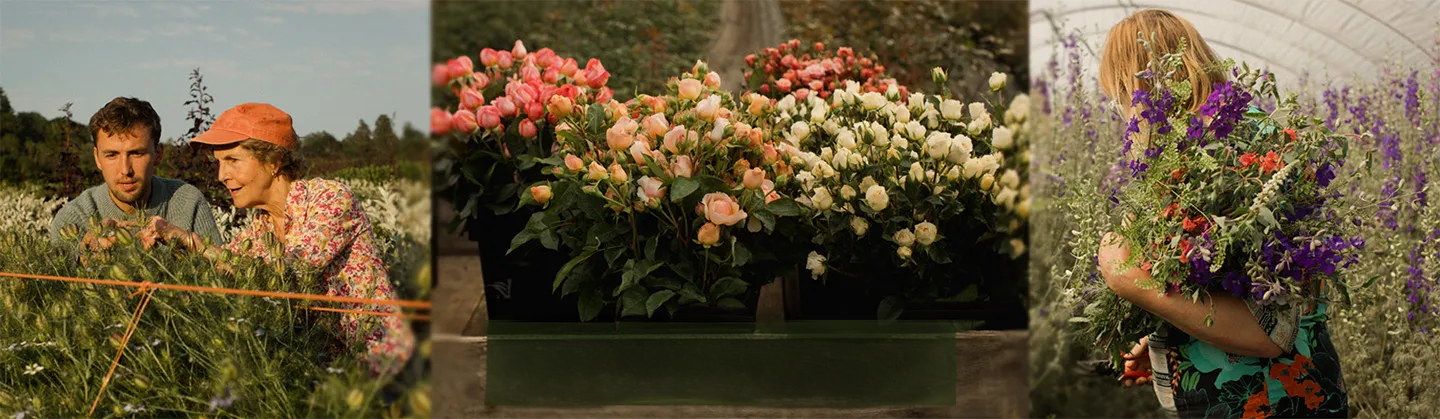
Today, The Real Flower Company grows almost 500 different varieties of flowers and foliage across five hectares of Hampshire fields and a one-hectare glasshouse in Chichester, West Sussex. The glasshouse allows us to extend the British growing season significantly, meaning more home-grown stems for more of the year. Our speciality remains what it has always been: scented garden roses, of which we tend around 30,000 bushes, alongside sweet peas, hydrangeas, and a vast supporting cast of foliage and seasonal blooms.
We grow to a rhythm dictated by the land, not by a logistics spreadsheet. It means our flowers arrive with their scent intact, their stems uncompromised, and their story rooted in a real place.
What we stand for.
The Real Flower Company has spent thirty years making the case that fragrance is not a luxury detail but the whole point. That flowers grown with care, cut at the right moment, and handled with respect will outlast and outperform anything raised for shelf life alone. That the provenance of a bloom matters, as does the welfare of the people who grow it and the health of the soil it comes from.
We are proud to have played a part in returning natural fragrance to the centre of British floristry. We are prouder still of doing it without cutting corners, and of still growing, after all these years, in Hampshire.
A partnership with Kenya, done the right way.
In 1998, Rosebie established a sister farm in Nanyuki, Kenya, in partnership with Tim and Maggie Hobbs of Tambuzi. The relationship was never simply a supply arrangement. It was built on shared values: meticulous growing standards, genuine care for the people and land involved, and a refusal to treat provenance as a marketing footnote. Tambuzi is now a certified B Corp, a recognition of the rigorous social and environmental standards it has held from the beginning. Their roses allow us to offer certain varieties year-round without compromising on the quality or integrity that defines everything we do.
Read More