Call us on 01730 818 300 (Monday to Friday: 9am - 5pm)
|
How to collect and preserve flowers and berries for winter and Christmas arrangements.

Autumn is a wonderful time of year for foraging in the hedgerows. So I always try to tuck a pair of secateurs into my pocket when I go for a dog walk – it’s usually worth cutting something when you see it rather than returning to find it gone over or that the birds have spotted the same berries as you.
By planning ahead now, you can find yourself with a rich selection of locally sourced, free flowers, berries and foliage to use over the winter and at Christmas.
Look out in the hedgerows for old man’s beard (Clematis Vitalba) in mid to late September. At this time of year, when it has finished flowering, its seeds form long silky tufted balls of hair that are a delight to discover. Cut lengths, remove any seeds and then spray the heads with hairspray to help them last.
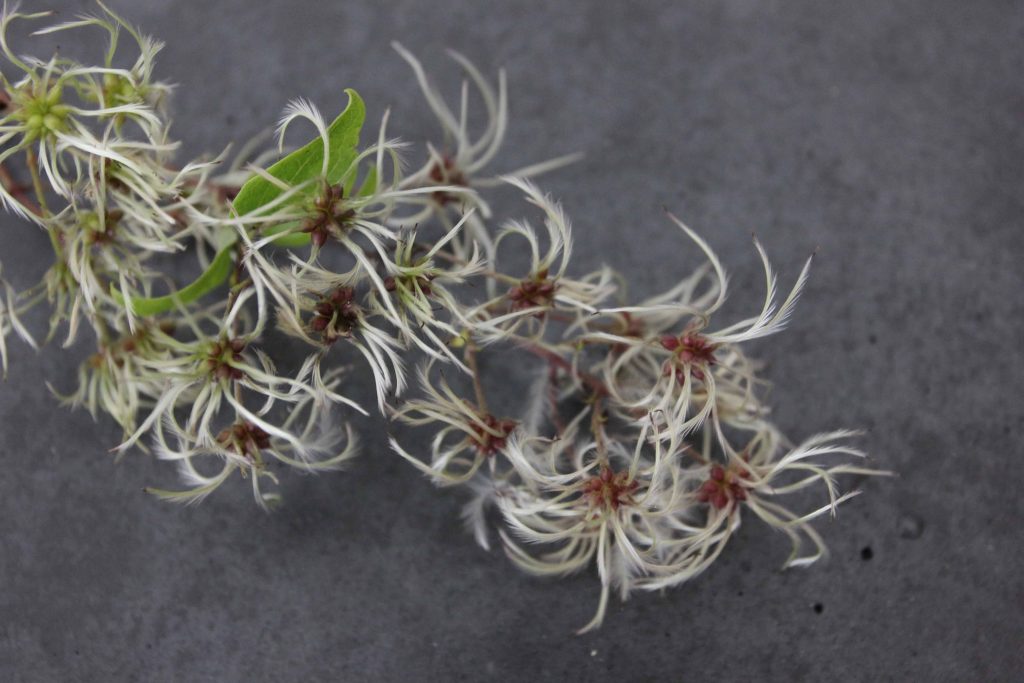
Old Man’s Beard collected from the hedgerow
Autumn is also the perfect time of year to gather rose hips. Again, cut in lengths and discard any leaves. Then store in a cool, dark, dry place to discourage the plump hips from shrivelling. On our Hampshire eco flower farm over the years we’ve done many trials to ensure the hips we grow look beautiful freshly picked but also dry well. My favourites are the pumpkin-shaped Rosa rugosa hips and the star-like clusters of our hip hop rose hips.
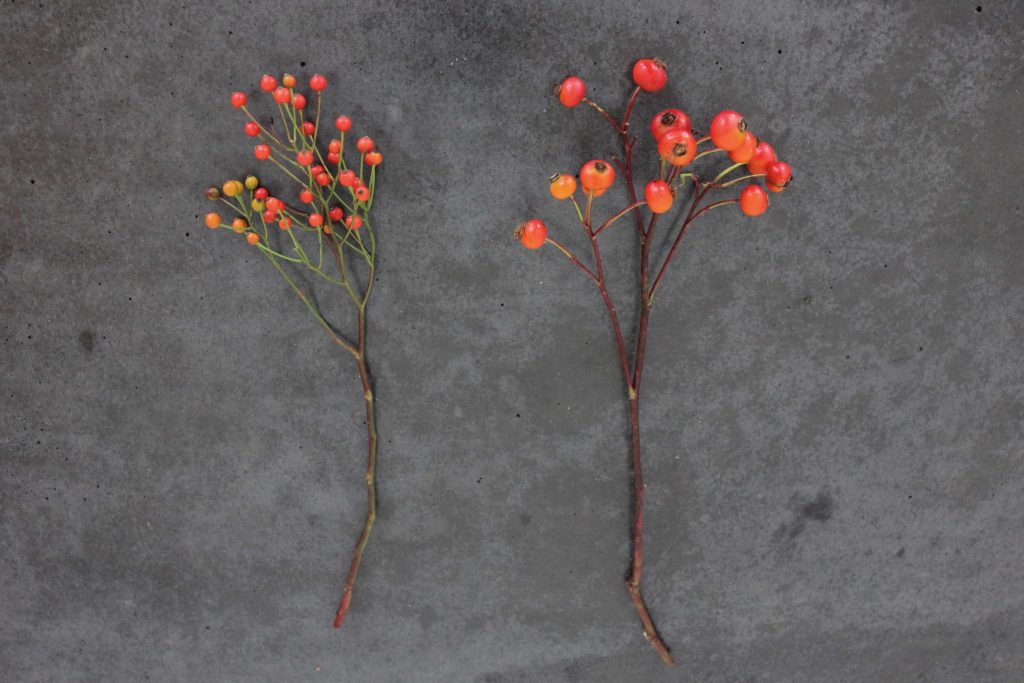
Hip hop rose hips left and Rosa Rugosa hips from our Hampshire flower farm
Hawthorn (Crataegus) berries are another glorious feature of the autumn hedgerow. As with rose hips, I recommend cutting them in lengths, removing any leaves and then storing in a cool, dark place to dry.
We grow spindle berries (Euonymus Europaeus) on our sustainable English flower farm and they are a favourite of mine because they bring so much joy and colour to an arrangement. The green foliage, turns an incredible pinky red and has beautiful bright pink seed capsules which open to expose bright orange seeds.
We cut grasses on our farm throughout autumn as they add so much colour, texture and movement to arrangements. If you have grasses in your garden, it’s worth experimenting to see which ones work, because many varieties that look beautiful in a border shed when they are cut or dried. You can find out more about the grasses we grow for cutting here.
A firm favourite on our English flower farm is Hydrangea Paniculata. At the end of the English rose season these frothy clouds of ivory blush take centre stage, and they fade to a wonderful antique hue that’s just as pleasing as their initial bloom. Either dry using the glycerine method described below or place in a vase with just a little water and leave to dry out.
In early autumn the leaves of the field maple (Acer Campestre) turn spectacular shades of flame and red. To preserve them, place the leaves in a dish and fully submerge in the same solution of glycerine and hot water described below. Weigh the leaves down if you want to keep them completely flat – I find sandwiching them between two baking trays works well. Leave for four to five days and then pat dry. Place a preserved leaf on a napkin for a simple and elegant decoration or write names on your preserved leaves for dinner party place names.
October is usually the best time to forage for dogwood berries (also known as Cornus), which can be bright red, black or even white. My favourite are clusters of red dogwood berries. You can preserve these using the glycerine method described below.
I’m particularly fond of ivy with berries – it works so well in winter arrangements – so if I spy some in the hedgerow, I always try to grab it while I can. The berries are a favourite with birds so they don’t last long.

Berried Ivy picked in early October before it’s green star-like clusters have turned to berries.
Also known as mock olive, Phillyrea – something you’ll find in the garden rather than the hedgerow – is a wonderful filler for winter flower arrangements. I’m very fond of this small-leafed shrub, which makes a great alternative to box at Christmas.

Phillyrea from our Hampshire flower farm
Another garden plant that’s a great choice for winter, with rich, dark foliage that always looks strikingly festive
There are many types of eucalyptus but I’m always drawn to varieties with a grey tone and sharp definition to their leaves. Eucalyptus dries beautifully, either using the glycerine method described below or left in a vase with a small amount of water.

Eucalyptus from our South Downs flower farm
These all work well to give your home a traditional Christmas feel. Store in a cool, dark place to keep them looking their best.
The epitome of Christmas! If you find mistletoe you can reach, it’s worth picking it early as it lasts really well. The same goes for holly. Store both in a cool, dark place. In our part of Hampshire mistletoe is rare, so for me Christmas is associated more with the aromatic scent of rosemary from our Fairtrade farm, which we pick all year round together with flowering lavender.

Hedgerow holly picked with young berries in early October
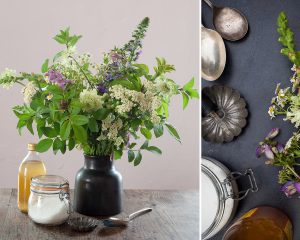
Using glycerine is a great way to preserve flowers and berries as it helps to maintain some of the soft growing texture and prevents dried flowers and berries from becoming too crisp. You can find glycerine at your local chemist or online. Here’s a quick guide:
For ideas on ways to use your foraged berries, foliage and flowers for gift-wrapping, take a look here.
We stock a wide range of seasonal flowers, herbs and foliage in our London florist in Chelsea Green, available by the stem or as arrangements. For wholesale enquiries, Jo and Jilly from our trade team are on hand to help here.
We’d love to see images of your foraged treasure. Share your images on Instagram using the hash tag #realflowersoftheseason for your chance to win a bouquet of our seasonal blooms. You can find out more about our monthly Instagram photography competition here.